


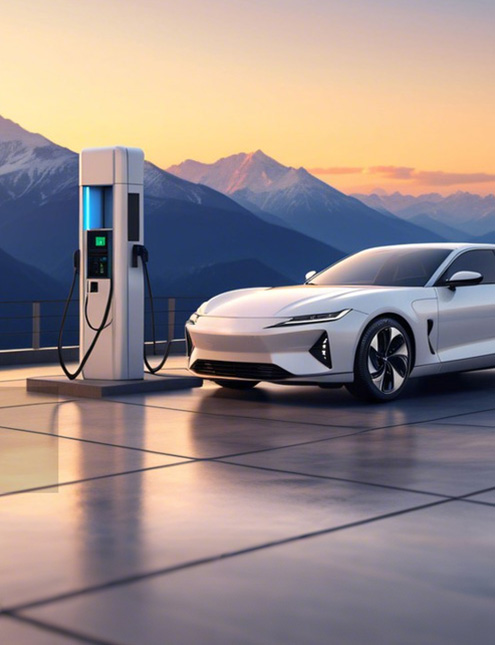



Solid-state batteries have the potential to become a key solution to the range issues facing new energy vehicles, with lithium-rich manganese-based cathode materials playing a crucial role. Unlike traditional lithium-ion batteries, solid-state batteries use solid electrolytes, which can be paired with lithium-rich manganese-based cathodes (with a theoretical capacity of over 300 mAh/g—significantly higher than current NCM materials) and lithium metal anodes. This combination could push energy density beyond 500 Wh/kg (compared to around 300 Wh/kg for conventional liquid lithium-ion batteries), potentially increasing driving range by more than 50%.


CUSTOMER SERVICE
Customer Service

Customer Service

Pre service
Pre-sales service
AFTER SERVICE
After-sales service
The professional customer service team of Xingu Technology adheres to the concept of "providing better products and services" to customers and responds to your needs in a timely manner.
+86-0570-4779318
Customer@xiguu.com

COMMON PROBLEM
Frequently asked questions
-
The range issue has been heavily criticized for years — could solid-state batteries become the "savior" of new energy vehicles?
-
What are your company's plans and outlook for the future development of lithium-rich manganese-based materials?
We firmly believe that lithium-rich manganese-based (LRM) materials are one of the key technological pathways for the next generation of high-energy-density lithium batteries. Our future development plans are focused on the following areas:
Continued Performance Optimization: Further improving cycle life—especially under high-temperature, long-cycle conditions—as well as rate capability and voltage stability, aiming to narrow the gap with theoretical performance limits.
Enhanced Cost Competitiveness: Reducing material costs through process optimization, economies of scale, and supply chain integration.
Cobalt-Free / Low-Nickel Development: Advancing systems with reduced or even zero cobalt content, along with lower nickel content, to maximize cost and safety advantages.
Exploration of New LRM Systems: Actively exploring promising new directions such as lithium-rich manganese-iron-based systems.
Deepening Collaboration Across Industry, Academia, and Research: Working closely with upstream and downstream partners to accelerate material validation, standardization, and commercialization.
We are committed to becoming a global leader in lithium-rich manganese-based cathode technology and a reliable core supplier, driving the development of high-energy-density, high-safety, and low-cost lithium-ion batteries, and contributing to the global energy transition.
-
What are the main application areas for lithium-rich manganese-based cathode materials, and how is your company's product development progressing?
Lithium-rich manganese-based (LRM) materials, known for their high energy density, are primarily targeted at applications with extreme demands for driving range:
High-end / Long-Range Electric Vehicles: This is the most important target market.
Electric Aircraft (eVTOL, Drones): These require very high energy density and lightweight solutions.
High-End Consumer Electronics: Such as flagship smartphones, laptops, and AR/VR devices, where thinner form factors and longer battery life are highly sought after.
Energy Storage (Specific Scenarios): Fixed energy storage applications with strict space limitations that demand high energy density.
Regarding our company’s progress: We have been deeply involved in the lithium-rich manganese material field for many years and have established a complete system from laboratory research and pilot production to mass manufacturing. Our modified LRM materials have achieved significant breakthroughs in key performance indicators—energy density, cycle life, and voltage retention. These materials have passed evaluations by multiple leading battery manufacturers and are now being produced and supplied at ton-scale with stable quality. We are actively promoting application integration and commercialization with target clients and are among the pioneers leading technology and industrialization in this field.
-
Compared to mainstream NCM (Nickel-Cobalt-Manganese) ternary materials and LFP (Lithium Iron Phosphate) materials currently on the market, what unique value does your company’s lithium-rich manganese-based material offer?
Energy Density: Significantly surpasses both NCM and LFP materials, making it an ideal choice for applications demanding extreme range (electric vehicles) or long standby times (high-end consumer electronics, drones, etc.).
Cost Potential: Manganese is abundant and inexpensive, with extremely low or even zero cobalt content and lower nickel content compared to high-nickel NCM. As technology advances and production scales up, its cost advantages will become increasingly evident. Especially in high energy density applications, its cost per unit of energy ($/kWh) is more competitive.
Safety: Manganese-based materials inherently have better thermal stability than high-nickel NCM materials. Through our proprietary modification technologies, we have further enhanced the thermal stability and safety performance of LRM materials.
-
What is the greatest advantage of lithium-rich manganese-based cathode materials, and how do they enhance battery performance?
The core advantage of lithium-rich manganese-based cathode materials (LRM) lies in their ultra-high specific capacity (typically reaching 250–300 mAh/g or more) and high operating voltage (average discharge voltage > 3.5V). The combination of these two factors results in a theoretical energy density far exceeding that of current mainstream high-nickel ternary materials (NCM/NCA) and lithium iron phosphate (LFP) materials. This holds great promise for enabling the next generation of lithium-ion batteries to achieve a significant leap in energy density—potentially reaching 400 Wh/kg or higher.
This means that batteries using LRM can provide electric vehicles with longer driving ranges or offer portable electronic devices extended usage times at the same weight or volume. Additionally, because LRM materials utilize abundant manganese and contain less cobalt and nickel, they also offer significant advantages in terms of raw material costs and supply chain security.
SAMPLE APPLICATION
Sample Request
We welcome anyone to leave us a message for consultation, and we will contact you within 24 hours of receiving the message.